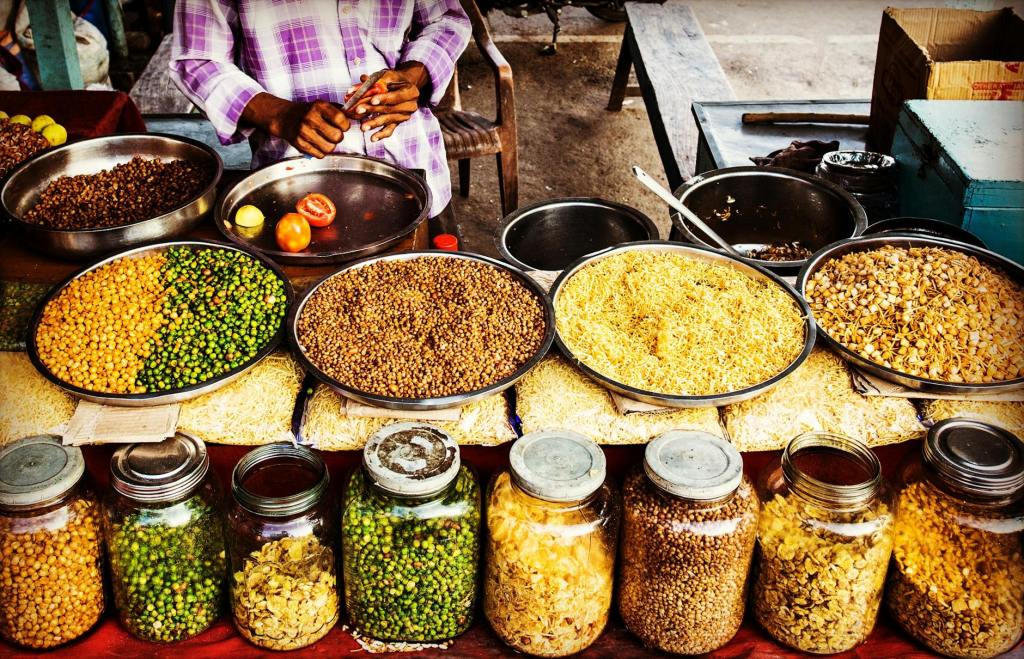
Beans and legumes are nutritional powerhouses and are one of the cheapest forms of proteins available. Finding ways to eat more beans and legumes is not only good for your health but also good for your wallet. And, on top of that, if beans and legumes replace meat, the planet benefits too. The triple win!
The health benefits of beans/legumes and rice.
There is truth in the children’s playground song: –
Beans, beans, good for your heart; the more you eat the more you…maintain good gut health 😉
Beans and legumes may be useful in preventing obesity and diabetes as part of a balanced diet, although evidence on this is inconclusive.

However, if you are not used to eating lots of beans and legumes, start slowly. A sudden switch to a bean based diet could make you very gassy or have a deleterious effect on your bowel habit. You could start with a 50:50 ratio of legumes to meat e.g. replace half of the meat in a bolognese or chilli with green lentils. Or, start with one bean based meal per week (see below for ideas) and build this up. Two or three bean based meals per week should be easily achievable. The guidelines do not suggest a limit to the amount of beans or legumes that you can eat in a week though, so if you love them, feel free to build up to eat more!
Rice provides some of the essential amino acids not found in legumes so while beans/legumes alone are not a complete protein, beans and rice together give you the complete protein package. Rice also provides carbohydrates, recommended along with protein for a balanced diet.
The cost benefits of beans/legumes.
Simply speaking, meat, particularly red meat, is expensive and beans/legumes are cheap. Substituting beans/legume based meals for meat based meals will therefore save you money. Although tinned lentils and chickpeas are fairly cheap, you can cut costs even further by buying dried pulses. Often, soaking in advance significantly cuts cooking time so it helps to be slightly more organised. However, if you forget to pre-soak, you can simply simmer pulses for longer (this might negate the savings from using dried pulses but if it’s all you have in the house, this is worth knowing) and some pulses such as red lentils and borlotti beans don’t need pre-soaking.
The environmental benefits of beans/legumes and rice.

The environmental benefit of beans/legumes is found mainly when they are eaten as an alternative to eating meat, and even more so when they are eaten as an alternative to eating red meat. Bean/legumes require less land per calorie and per gram of protein than meat, require very little fertiliser (many are actually nitrogen fixers and can be used to improve the quality of soil) and therefore result in less nitrogen run-off than is generated from animal farming and overall beans/legumes have a lower carbon footprint than meat.
Rice is often grown in flooded paddy fields which produces methane, and, in addition, some rice farmers burn the leftover husks, further releasing greenhouse gases, so rice has a higher carbon footprint than other carbohydrates such as wheat, rye, corn and potatoes. However, rice farming produces less methane than animal farming of ruminant animals such as cattle and sheep and overall has a lower carbon footprint than meat products. In addition, there are several initiatives that can cut the carbon footprint of rice even further although these have yet to be adopted at scale.
But aren’t beans boring?
Definitely not! This may simple be due to familiarity with beans/pulses and having basic cooking skills, but, bean based meals are some of my favourites! So let’s have a look at some different ways of cooking beans/legumes and rice and some recipes…
1. Store cupboard rice and dhal.
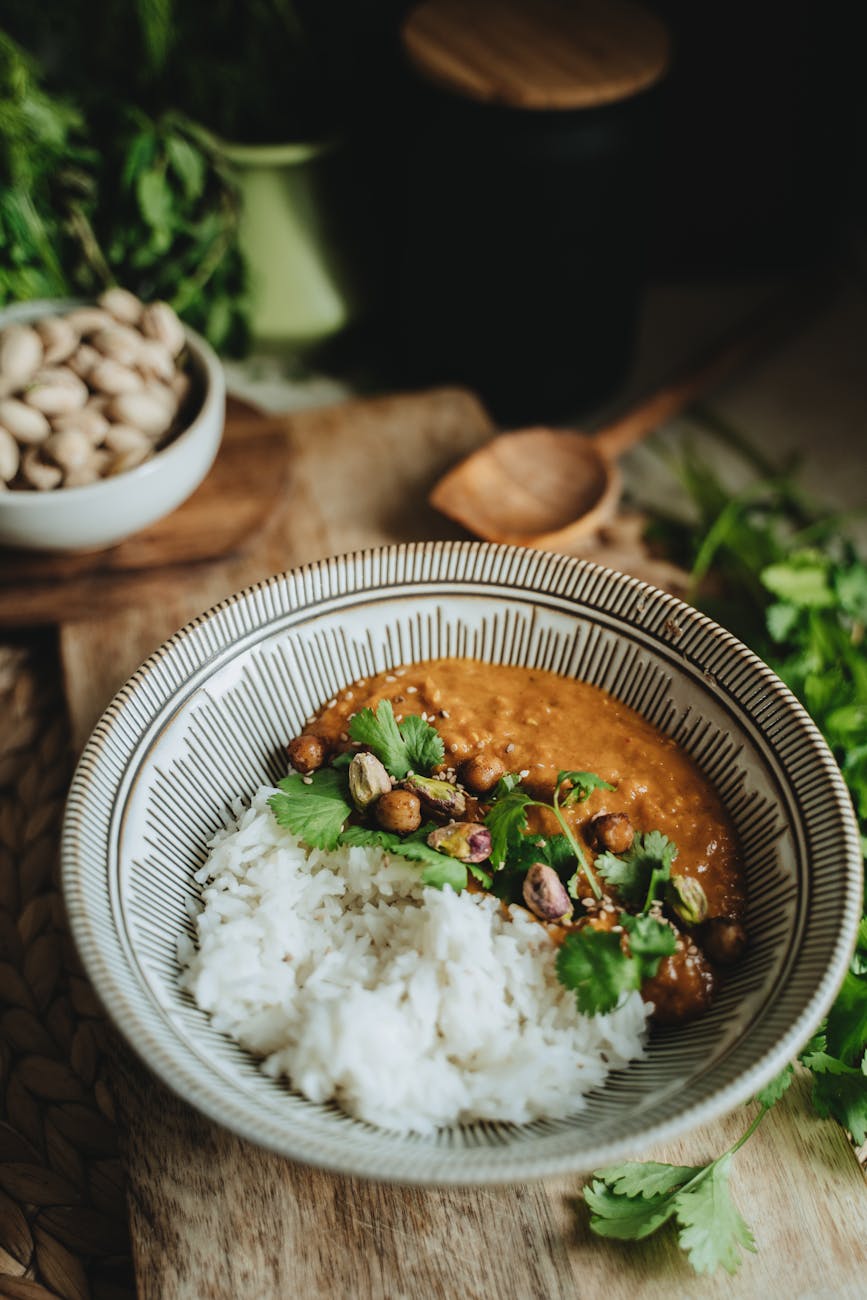
My receipe for dhal, used at least every other week as it’s a family favourite:-
Ingredients: Yellow split peas (500g will make more than needed for a family of four and the leftovers can be frozen for a work from home lunch or a quick evening meal); vegetable stock – from a cube is fine; sunflower oil (2-3 tablespoons); white onions (1 large or 2 small); dried ginger (1 teaspoon); dried garlic (half teaspoon); garam masala (1 tablespoon); dried chilli flakes (1/4 -1/2 teaspoon to taste); pinch of salt; tinned tomatoes; frozen leaf coriander; basmati rice (2 cups); natural yoghurt to serve.
Method: Wash the split peas thouroughly. Boil for 15 minutes then reduce to a simmer. When they are almost cooked (at least 45 minutes but keep testing) drain and wash the lentils and then put them back on to simmer in just enough vegetable stock (made as per manufacturers instructions) to cover the split peas. Keep simmering until you are happy with the consistency. My family like the split peas very well cooked with some breaking down to a porridge-like consistency but you can eat them slightly firmer than this or go in the other direction and simmer them until they are really porridge-like.
Whilst the split peas are cooking, chop the onions and soften them in oil until they turn translucent. Add the rest of the dried ingredients (you may need a tiny bit of extra oil at this point) and stir over heat for a few minutes, then add the tin of tomatoes and allow this to continue simmering until the split peas are cooked.
Once the split peas are nearly finished, measure out 1 large mug (or 2 smaller cups) of basmati rice. Wash this thourougly and place in a saucepan with a tight fitting lid. Then using the same mug or cup that you used to measure the rice, add cold water to the rice – you need to add 1.5 cups of cold water for each cup of rice. Also add a pinch of salt. Bring this to the boil. As soon as it is boiling, turn the heat down as low as it will go and put the lid on. After 15 minutes the rice will be cooked to perfection with no need to drain.
Combine the split peas and the onion & spice mix and stir in some chopped frozen coriander. Serve with the rice and yoghurt.
Variations: Add some fresh spinach or chard from the garden to the split peas. Add finely chopped onion and cucumber plus a pinch of salt to the yoghurt to make a raita. Serve with chapatis instead of rice for some variety.
2. Mung bean dhal.
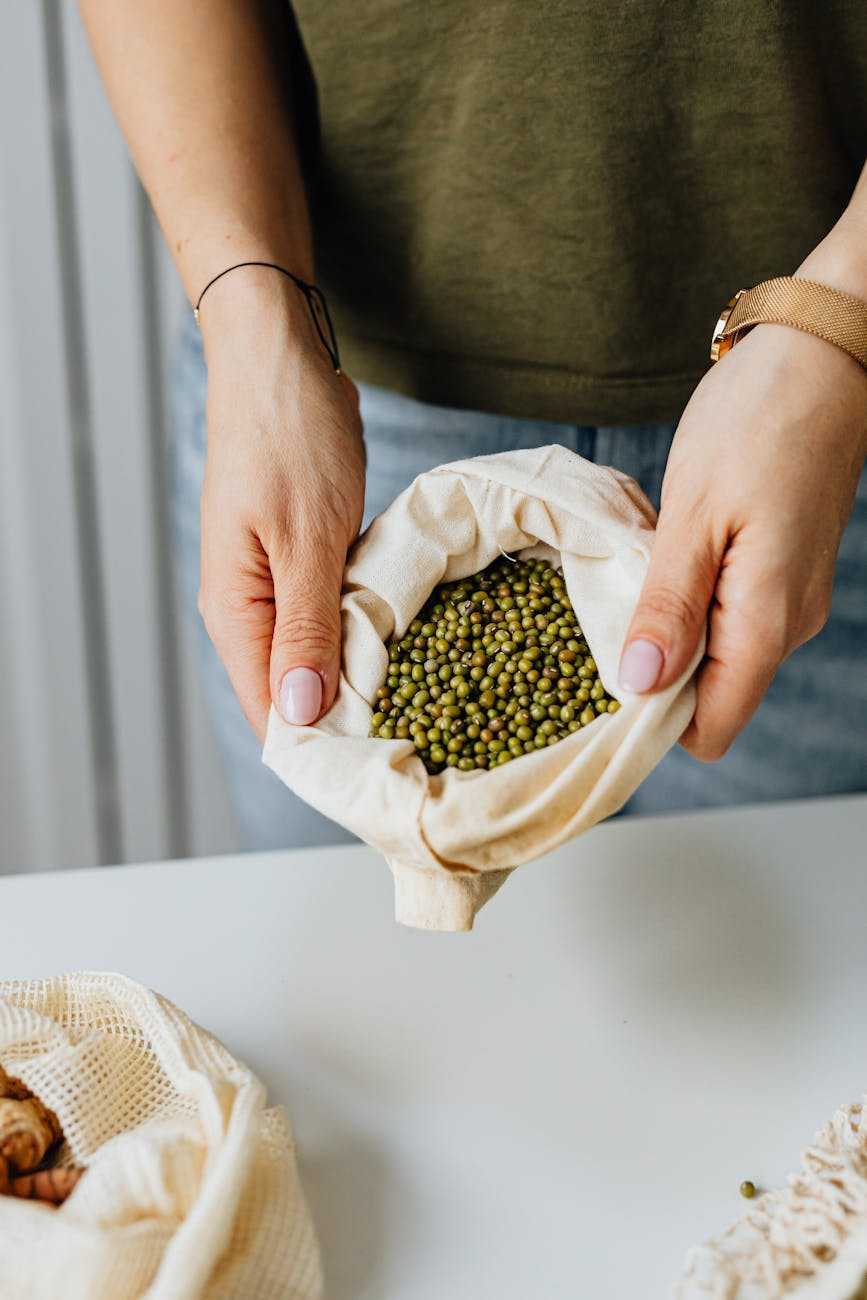
As above but with mung beans instead of yellow split peas. I use half the amount of tomato for this dhal as the mung beans work better with less tomato.
3. Butternut squash, spinach and chickpea curry.
An autumn/winter classic. I usually use tinned chickpeas for this as it means that this can be cooked and on the table in less than 45 minutes.
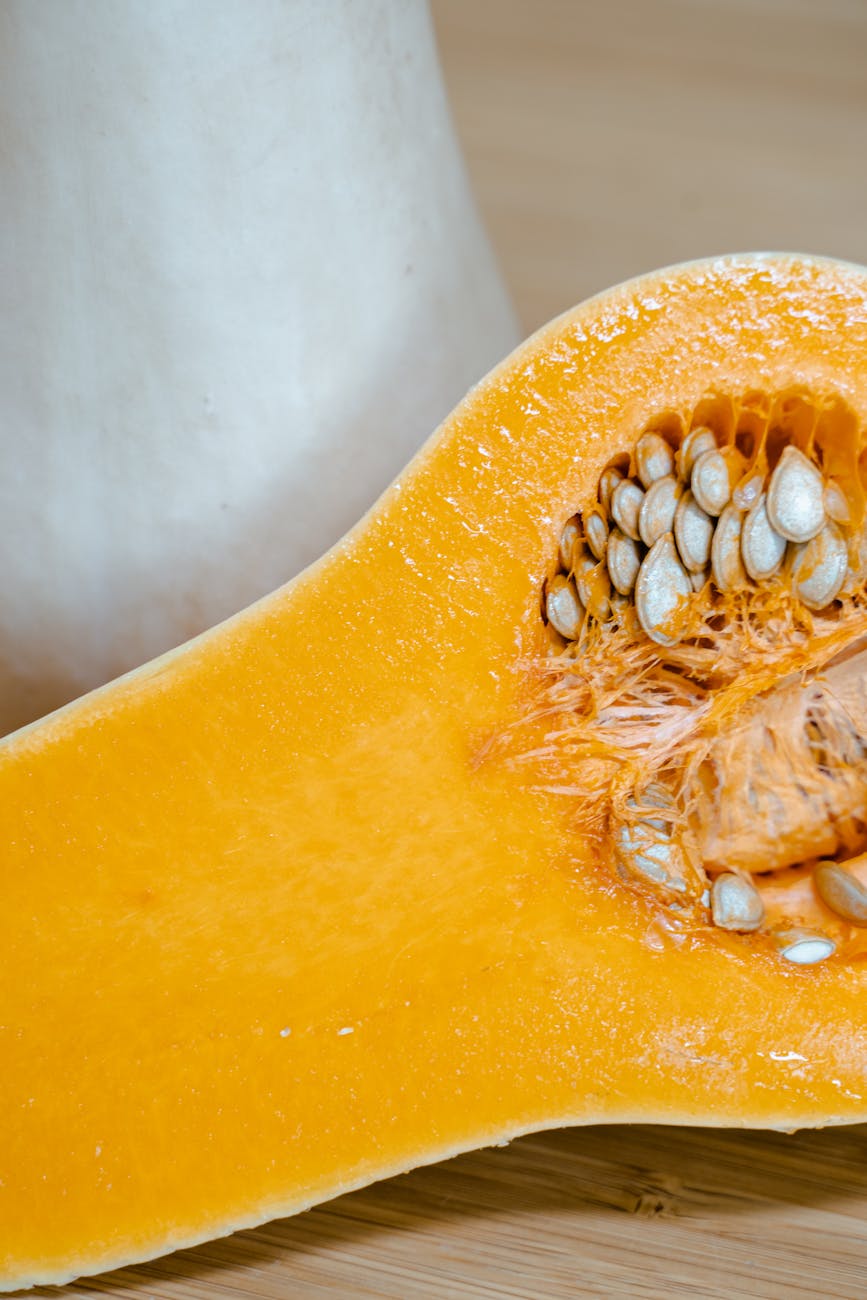
Ingredients: Sunflower oil (2 tablespoons); white onions (1 large or 2 small); 1 medium butternut squash peeled, de-seeded and cubed; dried ginger (1 teaspoon); dried garlic (half teaspoon); garam masala (1 tablespoon); pinch of dried chilli flakes or more for increased spice; pinch of salt; tinned chopped tomatoes; vegetable stock (500mls), fresh washed spinach (approx 200-300 grams); tinned chickpeas drained and washed (or dried chickpeas that have been soaked overnight and simmered until soft); frozen chopped leaf coriander; basmati rice and natural yoghurt to serve.
Method: Heat the oil. Add the chopped onion and soften for 5 minutes. Add the butternut squash and dried ingredients and stir for another 5 minutes. Add the tomatoes and stock and simmer for 25 minutes. Add in the spinach, coriander and chickpeas and cook for a further 5 minutes. Serve with rice and yoghurt.
4. Risotto with broad beans.
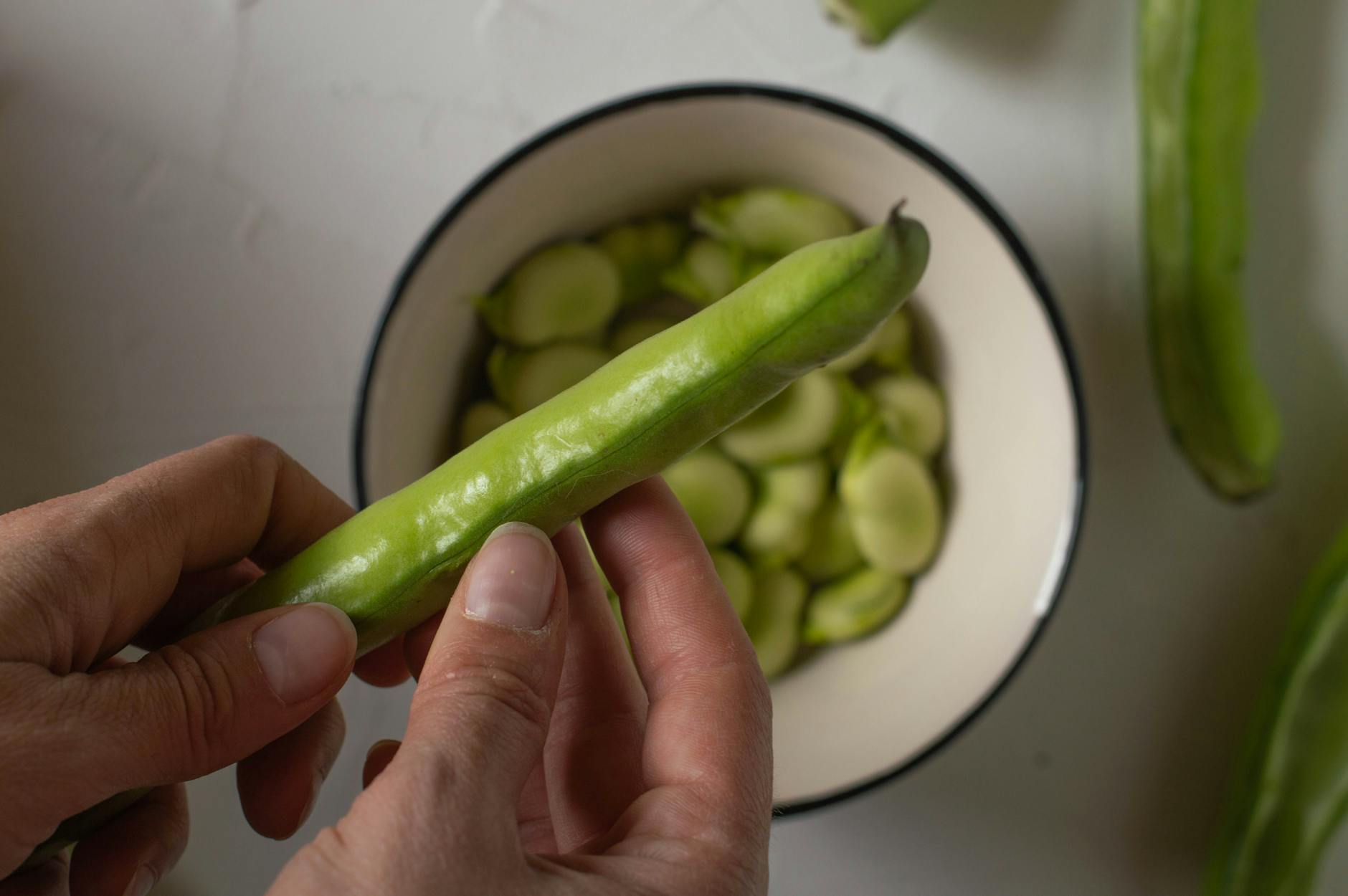
Switching continents to Italy, another of our family favourites is risotto. While we don’t always eat this with legumes, a simple broad bean risotto is a great option in spring. Try this with fresh home-grown, double-podded broad beans for superb flavour. My basic risotto recipe is below.
Ingredients: Broad beans, ideally home grown. Olive oil (2 tablespoons); arborio or carnaroli rice (350 grams for a family of four, or make 500 grams so that you have some leftovers for arancini balls); white wine (1 glass); vegetable stock (at least 1 litre but probably more); parmesan cheese.
Method: First, double pod the broad beans and place to one side.
Next, heat the oil over a medium heat. Tip the risotto rice into the oil and stir until coated. Pour in the glass of wine. Keep stirring whilst gradually topping up the fluid level with stock. When you have a rice that is cooked through and the liquid is creamy, the risotto is ready (approximately 20 minutes over a medium heat).
When you are ready to serve, reheat the double podded broad beans by briefly submerging in boiling water then drain. Ladel the risotto rice into a bowl, scatter over the broad beans and grate over LOTS of parmesan.
Variations: If your budget is tight, consider stirring a few cubes of cheddar cheese into the risotto. This will allow you to be much more sparing with the parmesan. This dish can also be made with garden peas and any other combination of spring veg instead of broad beans.
What to do with leftovers: Make arancini balls. Admittedly, this makes the risotto less healthy, however, these are very popular with our kids and can be enjoyed cold as a packed lunch treat. Our favourite filling is sauteed mushrooms and mozarella. Arancini balls are good served with a basic tomato and chili sauce to dip.
5. Chilli and Rice.

I use Jamie Oliver’s vegetable chilli recipe which includes sweet potatoes and peppers. I usually add black beans to this and serve it with rice, guacamole and sour cream. However, I notice that Thomasina Miers, the founder of restaurant chain Wahaca, is offering a more sustainable alternative to guacamole made from none other than my favourite broad beans. I will be trying this out ASAP.
6. Black bean burritos.
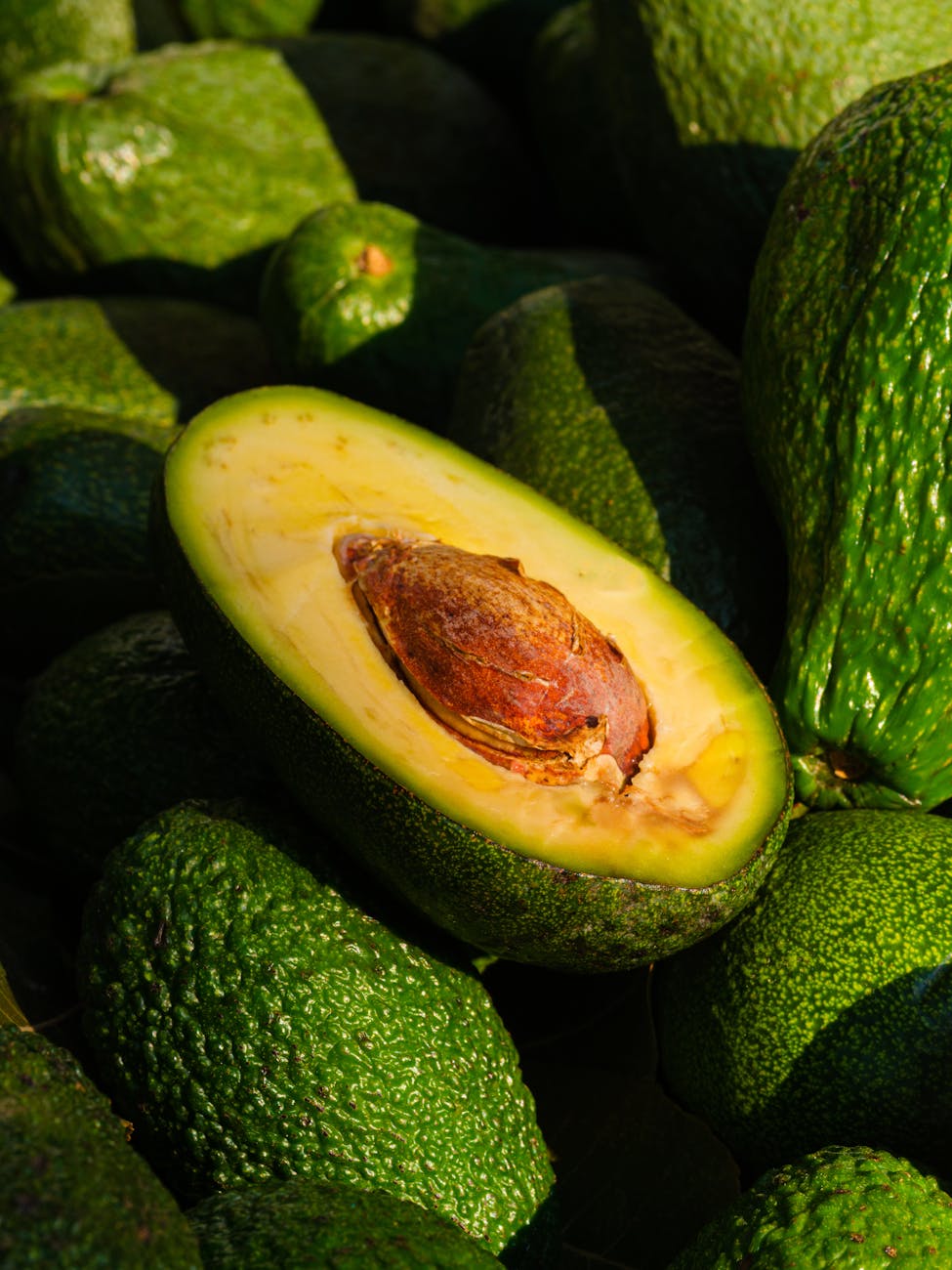
Nick-named “messy dinner” in our household as the kids like to make their own wraps, also with lots of guacamole, and their early attempts fell apart pretty rapidly! This is another great mid-week dinner. Here’s the highly adaptable recipe. The “optional” grated cheese and sour cream are in fact a necessity according to my children.
7. Poor man’s dhal.
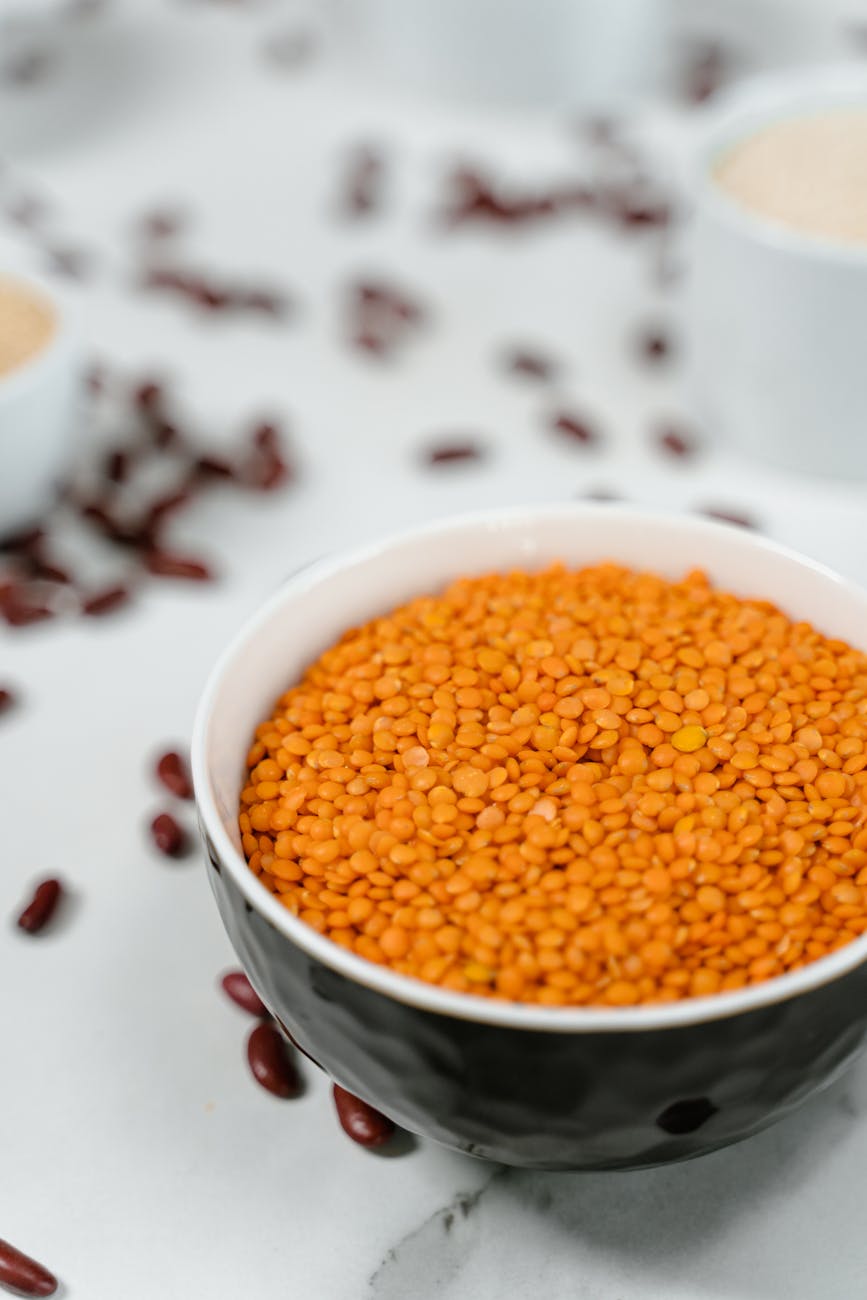
Ok, sorry it’s another dhal, so we might be stretching it a bit to make a 7th dish! However, I’ve added this one as it’s brilliantly fast – on the table in 30 minutes. My father calls this poor man’s dhal as red lentils were incredibly cheap when he was growing up in Pakistan.
Ingredients: Red lentils (500g will make more than needed for a family of four and the leftovers can be frozen for a work from home lunch); optional vegetable stock cube; sunflower oil (2-3 tablespoons); white onion (1 medium finely chopped); dried ginger (1 teaspoon); dried garlic (half teaspoon); garam masala (1 tablespoon); dried chilli flakes (1/4 -1/2 teaspoon); pinch of salt; black pepper to taste; cherry tomatoes; frozen leaf coriander.
Heat the oil. Add the chopped onion and stir for 5 minutes. Add the garlic, ginger, garam masala, chili, salt and pepper. Add the washed lentils (no need to pre-soak) and 1.5 litres of vegetable stock. Boil for 20 minutes. Half some cherry tomatoes. Stir through the halved tomatoes and coriander at the end of cooking. Serve with chappatis if you can’t face rice again. Tip – keep wholemeal pitta breads in the freezer. These can be popped in the toaster to eat with dhal if you need food super fast!







 The Art of Green Finance
Leave a reply to 3 Step End-of-Year Personal Finance Review – The Art of Green Finance Cancel reply