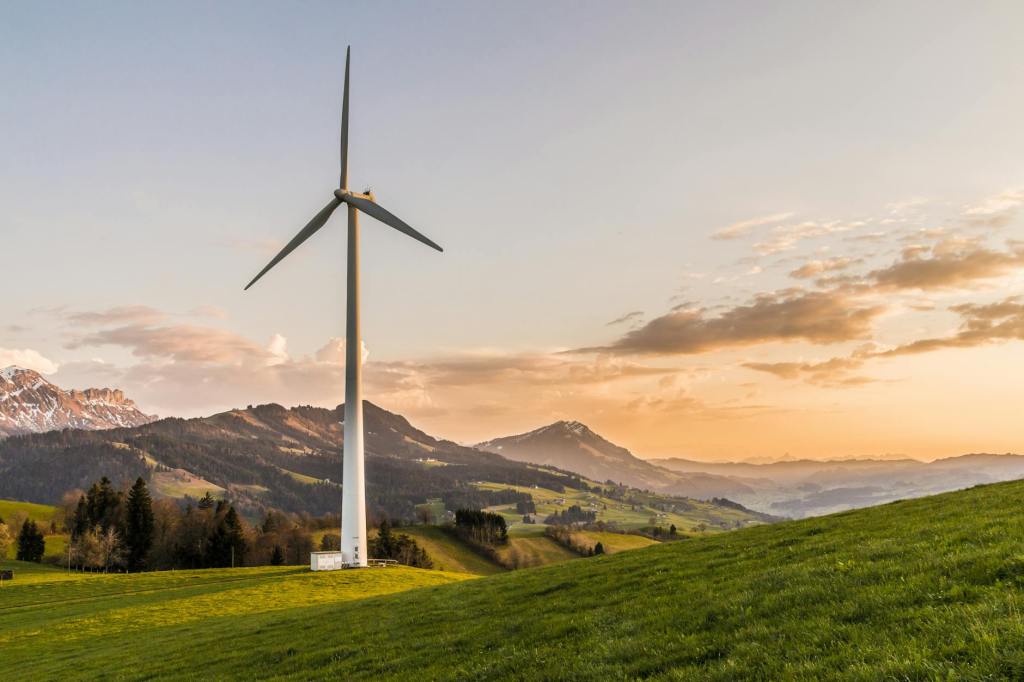
Clean energy sources including solar, wind, hydro and geothermal power are the future of energy and are likely to align with most peoples ethical principles.
In the UK, it seems likely that the Labour party will form the next government. Although Labour have now abandoned their previously touted 28 billion pounds worth of investment in the green economy, it seems likely that there will be some further investment along with policies aimed at increasing the share of energy supply that comes from renewable energy. So, might it be a good time to invest in renewable energy ahead of an expected investment boost in this area? Possibly!
So, how can one invest in renewable energy?
- Firstly, look close to home. Home solar and solar thermal are now well established and offer guaranteed returns. The payback time for solar photovoltaic panels is variable and depends upon the site and orientation of the solar panels and on individual household energy use. Try this calculator to get a rough estimate of your indivdualised payback time and potential profit over the lifetime of the solar panels. Note that if you use the energy you produce effectively, the payback time and potential profits look even more favourable. For example, on a sunny day in the summer months, we run our dishwasher, washing machine, heat a tank of hot water (via the iboost) and part-charge an electric car entirely on energy generated by our solar system, simply by staggering the timings of the above. Payback time for solar can be as low as 6 years given the high cost of energy in recent years, and this reflects our experience with home PV solar panels. The lifetime expectancy of solar panels is 20-25 years, so once the costs of installation are repaid, this investment offers guaranteed savings and gives a good return on investment over the lifetime of the panels. Low risk investment and the number 1 recommendation if you have money to invest in renewables.
- Invest in the national grid. The national grid is a company delivering electricity and gas to communities and businesses. It is predominently UK based but also has some US infrastructure and its shares are listed on both the London and New York stock exchanges. Here, I am refering to the UK part of the company and London Stock Exchange shares. The national grid has put a lot of focus on decarbonising the electricity system and promotes renewable infrastructure on its social media platforms. There is the need for huge growth of connectors as more and more renewable energy projects are developed and need to be brought online. The national grid has a track record of paying reasonable dividends and this is the main attraction of holding the stock, rather than expected growth in share price (although some growth could be possible). Although yields do not look super attractive in comparison to high saving rates at the moment, as interest rates are predicited to fall and savings rates are likely to follow, the yield may start to look more attractive again in coming months. Morningstar have comprehensively evaluated the company and give a low ESG risk rating. Medium risk investment (if part of a balanced portfolio) – High risk investment if insufficient diversification across investment portfolio.
- Buy shares in Thrive renewables. Thrive renewables is a certified B corp that has been developing renewable energy projects across the UK for 30 years. It is not listed on the London Stock Exchange but instead shares are available to buy via a share matching platform. Every few years, shares are also offered via Triodos Bank’s crowdfunding platform i.e. a new share issue due to new projects being brought forward. If you wish to sell shares, this can be carried out via the share-matching platfom or via Thrive renewables’ share buy-back policy (at a discount) if no buyer is found via share-matching. Thrive renewables has a track record of paying annual dividends. These are variable but the target is 5-8% per annum. Unfortunately, shares are not eligible to be held in an ISA or IFISA but some SIPP providers allow Thrive renewables holdings. Otherwise, consider limiting investments with the aim of staying below the ’24-’25 tax year dividend allowance of 500 pounds. If you earn more than this outside of an ISA you will need to make a tax submission. High Risk investment.
- Triodos crowdfunding energy offers Triodos bank has a well established crowdfunding platform where one can invest directly into both energy and non-energy related ethical projects. This may be in the form of shares or bonds with interest rates of up to 6.5% per annum for some recent energy projects. Terms can be long; between 5 and 16 years for example, but may be suitable for people who can tie up their cash for this amount of time. Some of the bonds are eligible to be held via an IFISA. High risk investment.
- Energise Africa. Energise Africa offers investments in clean energy projects across Africa that can be held in an IFISA. Most of the projects are small scale. The terms are relatively short i.e. 12-24 months. The investments should be considered very high risk and are perhaps best thought of as a charitable donation rather than an investment. However, there is the added potential of getting your money back, which could then be invested into further similar projects. In previous tax years, it has only been possible to hold one IFISA, however, in the ’24-’25 tay year, you may open more than one IFISA and therefore may wish to consider investing small amounts in projects that you consider worthwhile, for example consider investing 1% of your annual ISA allowance. Very high risk investment. Be prepared to lose all of your investment. Update: Energise Africa are currently offering to guarantee the first investment up to 100 pounds. This does of course rely on Energise Africa itself remaining solvent.
Before investing, your individual circumstances should be assessed. Consider taking independent financial advice.
The author holds shares in both National Grid and Thrive Renewables.






 The Art of Green Finance
Leave a reply to What are the different types of ISAs and what are the best ethical options? – The Art of Green Finance Cancel reply