
This article looks at the benefits of holidays, looks at suggestions for how much to spend on holidays, gives tips on how to make savings and finally gives some suggestions on which to base holiday ideas.
What are the benefits of holidays?
- Holidays provide time to think; great for big picture thinking!
- Holidays are good for stress management
- You may be able to spend more time with family
- You may have more time to indulge in a hobby such as art, photography, cookery, sports? (On the subject of hobbies, you may also like The best and worst hobbies for your finances.)
- You may be able to use the time to learn something new such as basic language skills or a new sport
- Holidays may expand your horizons by helping you to view things from a different perspective
So, once you’ve decided that you want to take a holiday and that you have the financial means to take a holiday, how much should you spend?
What percentage of your budget should you spend on holidays?
A few geeky personal finance people (hello, friends!) have given suggestions for the percentage of net income to save towards holidays . The percentage most often suggested is between 5-10% net income. This fits fairly well with my own expenditure in this area. However, given that I’m rather frugal in most other catergories, this is a relatively large part of my budget!
In terms of the actual amount that this equates to, Brits report that they spend just under £4,000 per year on average on holidays. This includes all expenditure.
Your personal spending choices may look completely different from my own and from the average expediture. My suggestion for budgeting is to always start from what you spend in reality and then refine from there onwards – read more in How to create a realistic budget.
Once you have an idea of your actual annual spending on holidays, you should consider how many holidays you want to take in the forthcoming year. In the UK, most people get 5-6 weeks of annual leave per year. Co-ordinating time off with bank holidays may allow you to stretch your leave even further. This means that you could take regular holidays every few months. This may be more beneficial in terms of stress management than one longer holiday. In fact, one study (albeit with relatively few participants) suggested that the optimal length of a holiday is 8 days, which could equate to 3 or 4 holidays per year depending on your holiday or annual leave allowance. Frequent breaks may also be beneficial if you have school age children in order to reduce the cost of holiday child-care. Once you have decided on the number of holidays, you can then divide your budget between the holidays that you want to take. You could either divide the money equally, or skew your spending so that you could perhaps take one holiday abroad and also have some less expensive holidays.
How to get the most from your holiday budget
The big expenses are likely to be transport and accommodation. The destination that you choose will affect both of these as well as prices of other items such as food and drink.
Transport. This is one area where the financial costs and ecological costs are sometimes out of step with each other. See ratings for each category below:
| Estimated costs per km | Carbon footprint per km | |
| Walking | Food (fuel!) costs (but you will need food anyway) and possibly hiking boots. | Negligible |
| Cycling | Food costs and cycling gear (often available second hand) | Negligible |
| Ferry | ££/£££ 0.70 Euros per km for a foot passenger; 1-2 Euros per km with a car | 19g per foot passenger |
| Bus/Coach | £ from 0.21 Euros per km | 27g |
| Train (UK) | ££ ranges from 0.08 – 0.23 Euros per km | 35g |
| Fly | ££ 0.18 Euros per km in 2018; (but probably higher in the post COVID era) | 150g |
| Self-drive (fossil fuel; sole driver) | £ 0.11 Euros per km | 170g |
| Cruise | ££ from 0.18 Euros per km | 250g |
So, based on the above, a walking or cycling trip from your door is going to be pretty hard to beat in terms of financial and environmental costs! A walking or cycling destination that you reach by train could also be an option if you choose your destination carefully. Trains are, in my opinion, by far the most relaxing way to travel, but they can be expensive. Look at destinations you can reach by a short train ride. Shorter journeys can add up to big savings. Book 3 months in advance and travel off peak for the best prices. Also check if you are eligible for a railcard. These are available for families travelling together for example.
A solo self-drive holiday is not a great option from a financial and environmental viewpoint but if you travel with family or friends the financial costs and carbon footprint can be divided between the number of people travelling together, making this a much better option than this first appears from the table above.
However, you may also have other travel considerations or preferences to take into account. One member of our family is horrendously travel sick in cars and buses (even using travel bands and/or medication). This means that these options are effectively ruled out for the time being.
Accommodation. If you have friends or family with enough space, consider taking a holiday in the location where your friends or family live and stay with them. You get to spend some quality time together and also save on accommodation. Do your research beforehand and find out what the local tourist attractions are. You may end up visiting somewhere that your friends or family never would have visited alone. Then offer to host them in return on another occasion.
Alternatively, consider camping. Or, better than sleeping in a tent (in my opinion), sleeping in a car or camper van. An old camper van can be purchased for around the same price as the average Brit’s annual holiday expenditure! Purchase wisely and you may get a couple of years worth of budget holidays from the vehicle. Learn about car mechanics and you may be able to extend the life of the vehicle even further.
In Scotland, you can stay in basic bothies for free. These tend to be in remote locations however so you will likely need a car to reach one.
The Youth Hostels Association have hostels, camping and glamping options across England and Wales for reasonable prices. Despite the name, you don’t have to be particularly youthful to stay here and there are plenty of family friendly options. In Scotland, look at Hostelling Scotland or further afield, look at Hostelling International.
Air BnB can offer good value but there are several ethical considerations to take into account. Air BnB has significantly increased the availability of cheap accommodation in several tourist hotspots adding to pressure from tourism on local infrastructure such as water services. Air BnB rentals have also pushed up local housing costs, particularly in cities that are popular with tourists. In several cities, there are regulations around short-term rentals and around which properties can be rented. Regulations exist in order to avoid putting pressure on local housing stock, however, Air BnB does not police rentals in areas where regulations exist and many Air BnB rentals are let illegally despite local regulations. Readers that want to travel responsibly will need to take these factors into account before using Air BnB rentals. Air BnB rentals located away from cities with large numbers of tourists may have fewer ethical issues. However, Air BnB has also drawn criticism for allowing the rental of properties in illegal Israeli settlments in occupied Palestinian territory; another issue that responsible travellers may wish to take into account. Consider EcoBnB as an alternative (although there are far fewer listings available currently).
Destination. As already mentioned, the holiday destination is key to keeping costs low and minimising environmental impact. With several cities being overwhelmed by tourism, visiting these cities in the low-season should definitely be considered. Alternatively, visit cities with fewer tourists.
What should you do on your holiday to get the most benefit?
Research suggests that an environment away from your normal daily routine and responsibilities may be most beneficial. This implies that a staycation may not be the optimum choice in terms of stress relief.
Chaotic, busy or frankly dangerous destinations may be exciting but are likely to be less restorative, whilst relaxing in nature is unsurprisingly likely to be better for stress relief. If stress reduction is part of your aim, you should also try to avoid overly busy or tight schedules and heavy traffic.
For maximum restorative benefit, try to limit the amount of time spent on work like activities such as shopping, cleaning, driving or using a phone or computer.
So, what to do instead. See some suggestions below…
Where to start with holiday planning
I like to consider the holiday research as part of the holiday. It gives me the opportunity to get excited about the holiday and the anticipation of the holiday probably increases the overall enjoyment from the holiday. I also like to have an aim for a holiday such as visiting a cultural or historical site, taking part in a nature experience or a combination of the above. I then plan travel and accommodation based around this aim. Occasionally, I scrap the whole plan if it ends up being too expensive! But, as I’ve already had some enjoyment from the researh, I consider this to be no hardship at all. Below are some ideas around which you could build a holiday:-
If you are interested in the natural world, consider a UK nature experience. Ideas include:
- January – Spot a barn owl.
- February – See cranes at various sites across the UK.
- March – See mad March hares in Lincolnshire
- April – See Ospreys in Leicestershire.
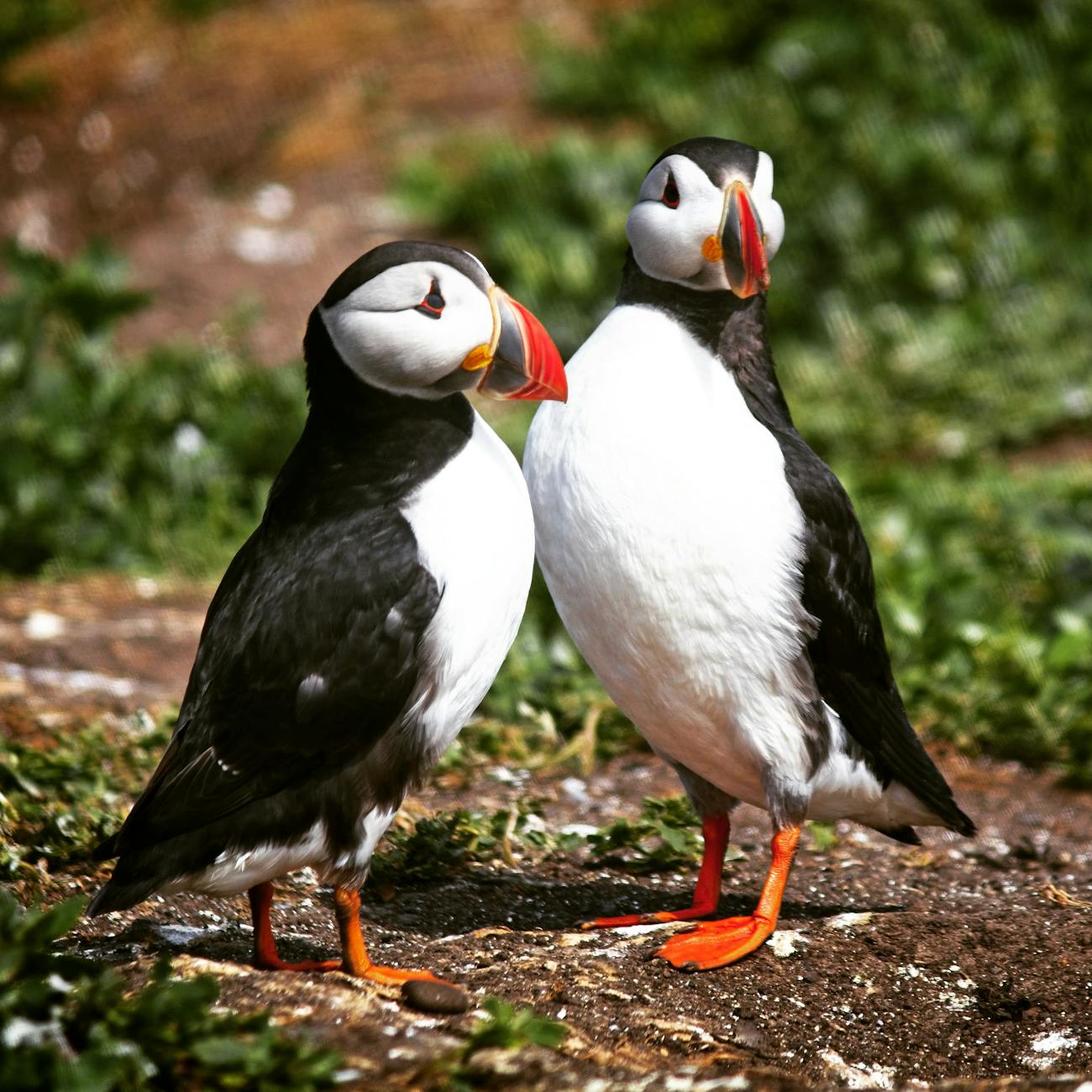
- May – See puffins and seals in Northumberland
- June – See puffins and possibly dolphins in Angelsey or look out for Orcas in Orkney.
- July – See dolphins in Cardigan bay or try to spot a shark in Scotland.
- August – Visit the Beaver Project in Cheshire. Look out for Beaver Safaris that the Cheshire Wildlife Trust run in the summer months.
- September – Go whale watching in Whitby.
- October – Deer rutting season at National Trust sites across the country.
- November – Watch leaping salmon in Wales, and perhaps also see an otter or two.
- December – Watch starling murmurations in Somerset
If you are interested in history consider a UK cultural holiday. The UK UNESCO World Heritage Sites are a good place to start researching. You may be able to reduce costs by becoming members of Historic Scotland, English Heritage or the National Trust. Heritage organisations have cross border partnerships, for example, Heritage Scotland membership also entitles you to half price entry to English and Welsh Heritage sites during the first year of membership so plan accordingly. Explorer passes are also available and may be better value depending on your likelihood of using memberships throughout the year, rather than just when on holiday.
Some fascinating prehistoric and historic trips in the UK include:
- Visiting the Natural History Museum in London to find out about human evolution and the earliest evidence of human ancestors in the British Isles
- See the earliest cave art in Britain in Nottinghamshire dating from 12,500 years ago
- Visit Gough’s cave in Somerset and learn more about Cheddar Man and cannabilism 10,000 years ago.
- Visit Skara Brae, the remains of a neolithic village in the Orkney Islands dating from c. 6000 years ago.
- Visit Britain’s most famous (although not the oldest) stone circle at Stonehenge dating from c. 5,000 years ago.
- See artefacts from the earliest known world civilisations including the Royal game of Ur c. 4600 years ago and the Standard of Ur from Mesopotamia produced c. 4,500 years ago, a stamp from the Indus valley civilisation c. 4,200 years ago and multiple objects from the Ancient Egyptian dynasties in the British Museum.
- Visit a bronze age flint mine in Norfolk.
- Visit an iron age hillfort near the English-Welsh border.
- Roman Britain:
- Visit Hadrian’s wall – it’s possible to walk its entire length and visit Vindolanda, a Roman fort just south of Hadrian’s wall along the way.
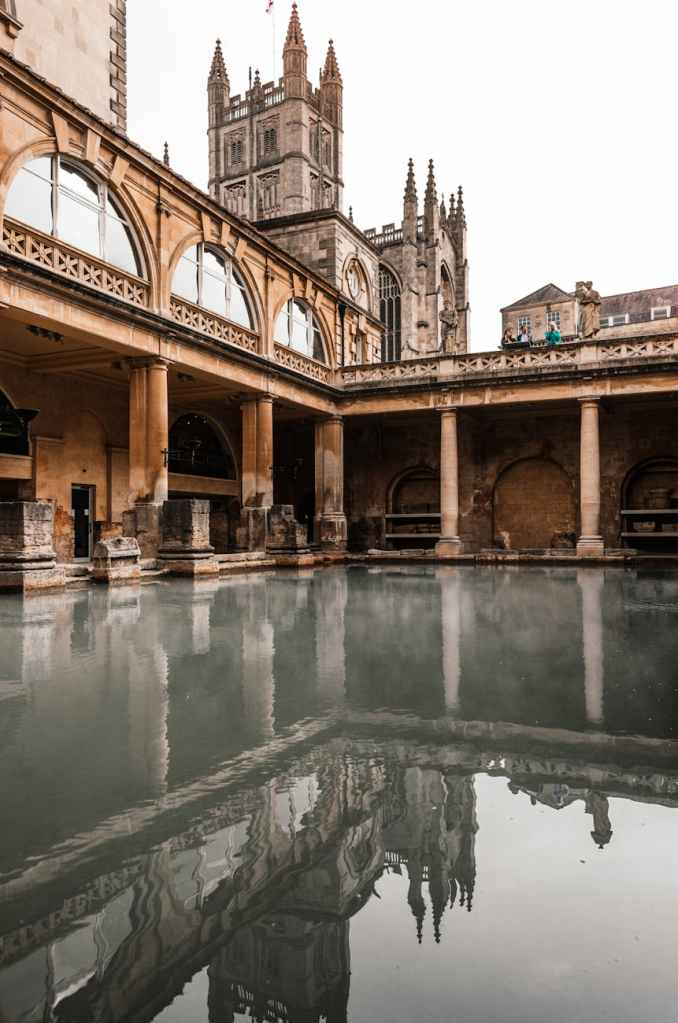
- Visit the Roman Baths in Bath.
- Follow the route of an Anglo-Saxon earthwork, Offa’s Dyke.
- Visit Lindisfarne in Northumberland, site of a famous Viking raid, or visit Jarlshof in Shetland, a site inhabited from neolithic times that also has remains of a Norse settlement. If you (or your kids) are fascinated by Vikings, consider visiting Jorvik Viking centre in York.
- Visit Battle Abbey, site of the Battle of Hastings in 1066.






 The Art of Green Finance
Leave a comment